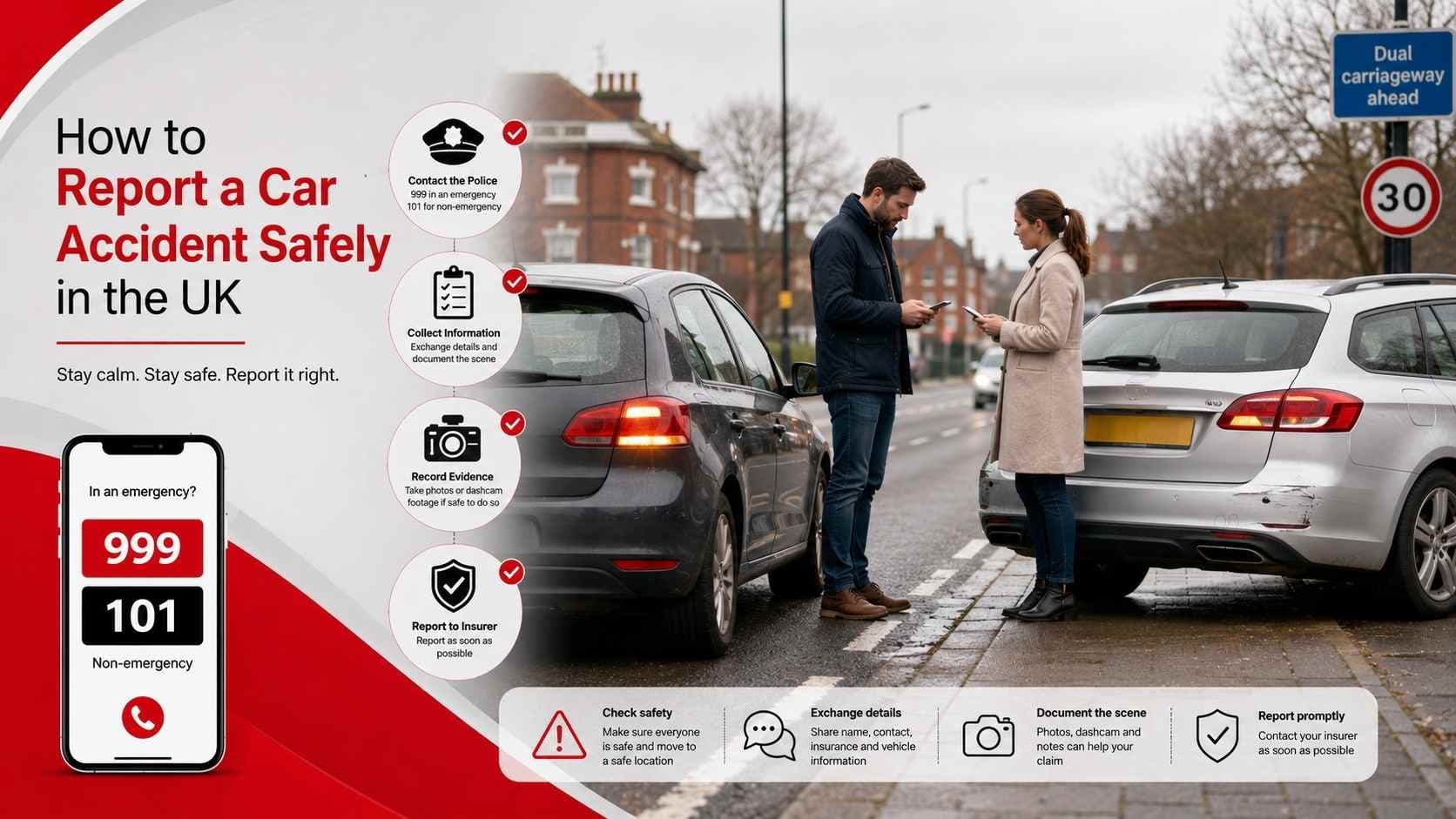
9 Easy Steps on How to Report a Car Accident in the United Kingdom Safely
Reporting a Car Accident in the United Kingdom
A traffic collision, or road traffic accident, occurs when a vehicle strikes another vehicle, a person, an animal, or an object such as a tree, wall, or guardrail. Car accidents are often caused by human error, technical failure, weather conditions, and other factors.
Car accidents can range from minor fender-benders to severe collisions that result in car damage, injuries, or fatalities. The severity of a car accident depends on various factors, including the speed of the vehicle, the angle of impact, the size and weight of the vehicles involved, and safety features such as seat belts and airbags.
Common types of accidents include rear-end collisions, side-impact crashes, T-bone accidents, head-on collisions, rollovers, and single-vehicle incidents. Car accidents can result in whiplash, broken bones, concussions, internal injuries, and serious trauma.
In the United Kingdom, the emergency services number is 999, which should be dialled for any immediate emergency requiring police, fire services, or medical assistance. The non-emergency police number, 101, is for situations that are not urgent but still require police involvement.
The Road Traffic Act 1988 governs driving licences, traffic offences, vehicle insurance, vehicle registration, road regulations, penalties, and enforcement in the UK. This Act outlines the types of licences, age restrictions, and disqualifications, as well as penalties for offences such as speeding, reckless driving, and driving without insurance.
The Act also mandates third-party liability insurance for all vehicles on public roads. It regulates vehicle insurance policies, including penalties for driving without insurance, and oversees vehicle registration and licensing, including related taxes and fees. The Act specifies road signs, signals, and speed restrictions, as well as the consequences for traffic violations, including fines, penalty points, disqualification, and imprisonment. Additionally, it covers personal injury claims, insurance coverage, and compensation through the Motor Insurers’ Bureau (MIB) for uninsured or untraced drivers. Learner drivers and new UK drivers can reduce confusion on the road by practising road signs, hazard awareness, and accident-response questions through UK driving theory test practice before driving independently.
According to UK national statistics, in the year ending June 2022, there were an estimated 1,760 fatalities in reported road traffic accidents, marking a 4% decrease compared to the year ending June 2019. Additionally, there were 29,804 reported killed and seriously injured (KSI) casualties, a decrease of 6% compared to 2019. Around 137,013 casualties of all severities were reported, a 12% decrease compared to 2019.
When looking at the demographics of road users, the group with the largest percentage change in fatalities between the year ending June 2022 and June 2019 was pedestrians, showing a 15% decrease. In terms of overall casualties, car occupants experienced the largest percentage change, with a 17% decrease. In 2022, 76% of fatalities and 62% of casualties of all severities were male.
Prioritising safety for the driver, passengers, and others involved in a car accident is essential when reporting an accident. Move to a safe location, activate your hazard lights to alert other drivers, and assess the casualties for injuries. If necessary, contact emergency services for medical assistance.
Notify the authorities by calling the police or emergency services. They will guide you on whether an officer needs to be present to file an accident report. Exchange important information, including names, contact details, vehicle registration numbers, and insurance details, with the other party involved. Be sure to collect the contact details of any witnesses.
Document the scene of the accident by taking photos or videos, capturing the positions of the vehicles and visible damage. This documentation is helpful when reporting the incident to insurance companies. Notify your insurance company as soon as possible, providing them with accurate and detailed information about the accident.
1. Stop the Car and Turn Off the Engine
If a driver encounters a situation that requires an immediate stop, halting the vehicle and turning off the engine is crucial for several reasons.
Stopping the vehicle ensures the immediate safety of all involved parties and prevents further movement or potential danger. Halting the car helps to avoid escalating any hazardous situations, such as a collision or unsafe driving conditions. Turning off the engine reduces the risk of fire, particularly in the event of a fuel leak or vehicle damage.
Stopping the vehicle is essential to minimise the risk of injury to the driver, passengers, pedestrians, and other road users. It creates a stable, controlled environment in which the driver can assess the situation and take necessary actions, such as reporting the incident or seeking assistance. Failing to stop and turn off the engine increases the risk of harm to people and property.
2. Assess Yourself
If a driver is involved in an accident or any other incident while driving, self-assessment is vital to check one's physical and mental condition after the incident.
Self-assessment is necessary to determine the extent of any injuries or physical distress. It helps to establish whether the individual is fit to take further action, such as seeking medical attention. Assessing oneself allows one to identify signs of injury, pain, dizziness, or disorientation resulting from the incident. This evaluation enables informed decisions about the next steps and the need for medical help. It is also crucial for ensuring one’s well-being and safety. Addressing any immediate medical needs promptly contributes to the overall recovery process.
Ignoring injuries or symptoms can result in complications or delayed treatment, jeopardising health and recovery. Additionally, being aware of one’s condition aids in communicating accurate information to medical professionals or authorities involved in the accident. Proactively prioritising self-assessment ensures appropriate steps are taken to safeguard health and well-being.
3. Move to a Safe Place
If the vehicle is in an unsafe location following an accident or incident, moving to a safe place is essential. This involves relocating the driver, passengers, and the vehicle to a secure area away from immediate danger.
Moving to a safe place minimises the risk of further harm or accidents. The well-being and safety of everyone involved, including the driver, passengers, and other road users, should always be prioritised. Relocating to a safer spot reduces the chances of additional collisions, traffic hazards, or exposure to ongoing dangers at the accident scene. This also provides a controlled environment in which one can calmly assess the situation and take appropriate action.
Accidents and injuries can be avoided by avoiding unsafe locations, such as busy roads or hazardous areas. Furthermore, relocating to a safer area ensures that authorities, emergency services, or tow trucks can reach the scene quickly. Demonstrating responsible behaviour by moving to a safe place promotes overall safety and reduces the risks associated with the incident.
4. Call Emergency Services
In the event of a car accident or emergency situation, calling emergency services promptly is crucial to ensure a swift response from skilled personnel. This action can save lives, prevent further injuries, and reduce the severity of any potential threats.
Calling emergency services alerts the authorities about the incident and provides them with vital details. This enables them to dispatch the appropriate resources, such as police officers, firefighters, or medical staff, to the scene as quickly as possible. The timely arrival of emergency services can have a significant impact on stabilising the situation and potentially saving lives. It is imperative to contact emergency services if someone’s life is in danger or there are serious injuries, fires, or other urgent circumstances.
Contacting emergency services promptly ensures that trained professionals, equipped with the necessary resources, can respond appropriately to the situation. They will provide medical assistance, secure the area, investigate the incident, and address any other urgent concerns. Always remember that calling emergency services is the fastest and most reliable way to ensure that help arrives at the scene in a timely manner, safeguarding everyone’s safety.
5. Exchange Personal Information with Those Involved
Exchanging personal information with all parties involved is essential in any accident. Collecting the names of the drivers, passengers, and others involved is important for contacting their families or informing them after the incident. Obtaining personal information is also crucial for following up after the crash.
Exchanging personal details serves several purposes. It ensures accurate information for insurance claims and legal proceedings, facilitating communication and determining liability efficiently. It also enables ongoing communication to provide updates, exchange relevant details, or address concerns related to the accident. Additionally, this exchange of information aids in the documentation of the incident for police reports, insurance forms, and other official records.
Furthermore, exchanging personal information ensures safety and provides assistance by allowing individuals to seek or offer help, such as contacting emergency services or arranging medical care. Finally, this exchange contributes to resolving the incident and ensuring all parties have the necessary details for insurance claims, repairs, or other actions, thus streamlining the process.
6. Picture the Scene
"Picturing the Scene" refers to mentally visualising the setting, layout, and significant details of the accident. This step is critical in the investigation process, as it helps investigators develop a clear and accurate understanding of the scene.
The step of "Picturing the Scene" serves several purposes, such as collecting evidence, reconstructing events, and understanding the context of the incident. Visualising the scene helps identify potential evidence, determine entry or exit points, and provide insight into the sequence of events.
By focusing on collecting relevant items, such as fingerprints, DNA samples, or physical objects, investigators can gather valuable information. The surrounding environment, including factors like lighting, spatial relationships, and potential obstacles, can also provide crucial context for interpreting evidence. "Picturing the Scene" is vital as it lays the foundation for an effective investigation.
By thoroughly visualising and understanding the scene, investigators can avoid missing critical details, misinterpreting evidence, or failing to uncover important information. This organised and methodical approach increases the accuracy, efficiency, and success of the investigation process.
7. Seek Witnesses
In the case of a hit-and-run on a busy street, investigators arrive at the scene immediately after the incident to gather information and identify the responsible party. "Seeking Witnesses" refers to the active process of finding individuals who observed the accident and can provide essential details. This step is vital for collecting first-hand accounts and different perspectives on the event.
Witnesses offer crucial information regarding the timeline of events, help identify the vehicles involved, or describe the person responsible for the accident. Their statements assist in corroborating evidence, filling in missing details, and offering leads for further investigation. The "Looking for Witnesses" phase primarily involves gathering information. Witnesses often have direct insight into the incident and provide details that investigators might not initially notice. Their accounts contribute to painting a clearer picture of what happened and assist in moving the investigation forward.
Corroborating evidence is another important element. Witnesses can independently verify facts or support other parties' accounts, thereby strengthening the credibility of the evidence and enhancing the investigation. Identification of suspects is another key stage. Witnesses can offer descriptions of the responsible individual or the vehicle involved, helping narrow down potential suspects for further focus.
In conclusion, seeking witnesses is essential to gather accurate and impartial information about the incident. Their testimony can provide vital clues, perspectives, and evidence that might be difficult to obtain otherwise. By actively looking for witnesses, investigators increase the likelihood of uncovering significant details and progressing towards a resolution. It is a critical step in ensuring a comprehensive investigation and a fair pursuit of justice.
08. Obtain Dash Cam Footage
Dashcam footage is a valuable tool for capturing and documenting an incident that occurred while driving. It plays a key role for various reasons. Firstly, dashcam footage provides a visual record of the event, offering an unbiased perspective of what transpired.
The footage serves as an objective account, capturing details that might otherwise be overlooked or disputed. It is used by insurance companies, law enforcement, and legal authorities to determine fault, assign liability, and resolve disputes. Secondly, dashcams contribute to improving road safety and security. They capture reckless driving, traffic violations, or hazardous road conditions, serving as a deterrent to unsafe driving and promoting safer roads.
Moreover, in cases of accidents or emergencies, dashcam footage allows authorities to analyse the cause of the incident and gain valuable insights. Thirdly, dashcam footage is often essential when filing insurance claims, as it provides clear evidence of the circumstances leading up to the accident, including the actions of other drivers. Insurance companies review this footage to accurately assess the situation, determine fault, and expedite the claims process.
Lastly, dashcam footage is critical for personal safety, especially during confrontations with aggressive individuals on the road. It offers irrefutable evidence of the incident, enabling authorities to take appropriate action. The decision to obtain dashcam footage stems from the need for a reliable, objective record of the event. By capturing the incident on camera, it ensures that a clear and factual account is available for legal, insurance, or personal use. In situations where there are disputes about what happened, dashcam footage serves as a definitive record.
09. Know the Name of the Officer Assessing the Accident
It’s important to know the name of the officer handling an accident investigation, whether it involves a car crash, pedestrian collision, or another type of incident that requires law enforcement involvement.
Knowing the officer’s name is vital for several reasons. First, it allows those involved in the accident to communicate directly with the officer responsible for the case. Second, it ensures accountability, as individuals can address any concerns regarding the investigation directly with the officer assigned to the case. Third, the officer’s name is crucial in legal proceedings. If the accident leads to legal action, the individuals involved need to provide accurate details to their legal representatives, ensuring the correct parties are contacted and that the proper evidence is gathered.
Additionally, keeping track of the officer’s name aids in record-keeping, allowing individuals to maintain organized documentation related to the incident. Knowing the officer’s name creates a direct communication channel, ensuring the investigation is transparent and efficiently handled. It also helps maintain clarity when reporting the accident to insurance companies or legal representatives, strengthening the credibility of the report.
Lastly, having the officer’s name is beneficial for documenting the accident. Proper documentation enables individuals to track and maintain a timeline of events and serve as a reference for future inquiries, claims, or legal proceedings. Knowing the officer's name ensures a more organized and accountable investigation process.
Here's the rewritten version of the article for ICUK Insurance, following your guidelines:
Understanding Car Accidents and Their Impact
A car accident occurs when a vehicle collides with another object, causing damage to the vehicles involved. The severity of a car accident can vary, with incidents classified based on the extent of vehicle damage, injuries, and potential outcomes.
Levels of Car Accidents
- Minor Accidents: These are low-impact collisions, causing only minor damage such as dents, scratches, or paint damage. Typically, these accidents do not lead to significant injuries and usually do not require immediate medical attention.
- Fender Bender: A fender bender is a slight collision that damages the front or rear bumper. It can lead to minor injuries like whiplash or soft tissue damage, though it is generally considered a minor accident.
- Moderate Accidents: A moderate accident involves a higher level of impact, resulting in more considerable vehicle damage, such as broken windows or displaced car parts. Injuries can range from minor to moderate, including fractures, cuts, and severe soft tissue damage.
- Major Accidents: Major accidents involve significant vehicle damage, often with multiple vehicles involved. They result in serious injuries, such as broken bones, head trauma, spinal injuries, or internal injuries. Crushed frames and deployed airbags are common in major accidents.
- Catastrophic Accidents: These are the most severe accidents, often involving high-speed impacts, rollovers, or collisions with fixed objects like trees or buildings. They frequently result in life-threatening or fatal injuries, such as traumatic brain injuries or severe spinal injuries, and may involve multiple fatalities. Vehicle damage is extensive, requiring substantial emergency response and medical intervention.
Emergency Hotline Numbers in the UK
- 999: This is the emergency hotline for police, fire, or ambulance services.
- 111: Call 111 for non-emergency medical issues that require urgent attention.
The Road Traffic Act 1988: Key Provisions
The Road Traffic Act 1988 is essential UK legislation that sets out requirements for driving licenses, vehicle registration, and insurance. Under the Act, all motor vehicles must be insured against third-party liability. Driving without valid insurance is an offence, and providing false insurance information is also illegal. The Act covers speed limits, traffic signs, and safety regulations like seat belts and mobile phone use while driving, aiming to improve road safety.
Car Accident Statistics in the UK
In 2019, road traffic fatalities and accidents were most prevalent on urban roads. Motorways, while carrying 19% of traffic, had a lower fatality rate, accounting for only 5%. In 2021, there were 1,558 fatalities from car accidents, marking an 11% decrease from 2019.
How Does Car Insurance Ease the Problems of Finances with Car Accidents?
Car insurance plays a vital role in alleviating the financial burden of car accidents. ICUK Insurance helps by providing coverage that can save you from the high costs of vehicle repairs, medical bills, and legal fees. For anyone looking to save on car insurance, it's worth exploring cheap car and van insurance in Liverpool or a national quote for cheap car and van insurance in UK. By doing an insurance comparison for cheaper car coverage, you can ensure you're not paying too much.
Is Car Insurance Required in the UK?
Yes, car insurance is required by law in the UK under the Road Traffic Act 1988. All motor vehicles must be insured against third-party liability. ICUK Insurance offers a variety of plans to help you meet this requirement while keeping costs affordable. Whether you're searching for cheap car and van insurance in Liverpool or looking for a better rate across the country, ICUK Insurance can help.
Minimum Car Insurance in the UK
The minimum required car insurance in the UK is third-party insurance. This covers the cost of injuries to others and damage to their property in the event of an accident. It does not cover the insured's own vehicle or injuries. Comprehensive insurance, which offers more extensive coverage, is available for those seeking greater protection.
Steps to Get Car Insurance
- Assess Your Coverage Needs: Consider your budget and the type of coverage you need.
- Compare Providers: Research different insurance companies to find the best rates and coverage for your needs.
- Consider Extras: Look into additional coverage options, such as roadside assistance or breakdown cover.
- Review Your Policy: Ensure you understand all terms, conditions, and exclusions before purchasing.
- Pay for Your Policy: Once you’ve selected your insurer, make your payment to activate your coverage.
- Receive Insurance Documents: After payment, you’ll receive your policy documents.
Will I be Insured After Signing the Car Insurance Policy?
Yes, once the car insurance policy is signed, coverage begins. Make sure you review the policy carefully to understand the coverage, premiums, and any waiting periods before the full benefits apply.
How to Claim for Car Insurance?
The following steps are listed below for claiming car insurance.
- Read the insurance policy.
The policy contains all the information needed for the insurance coverage. Make sure to read, understand, and comprehend everything so that when the time comes, there is already an understanding of the policy. This is especially important when you need to file a claim with ICUK Insurance. Understanding the terms can prevent unnecessary delays during the claim process. - Secure the accident scene.
During an accident, it is important to stay calm. Check for any injuries and immediately call for help if medical assistance is required. If you are looking for cheap car and van insurance in Liverpool or across the UK, ensure your insurance provider is notified in case you need to claim for damages or injuries from such incidents. - Document the accident scene.
Do not forget to take photos of the scene showing the damage to the vehicle and the plate number. These details will help your insurer, like ICUK Insurance, process your claim quickly and accurately. - Notify the insurer.
Report the incident to your insurer as soon as possible so they can begin processing the claim. The insurer will then provide a list of accredited repair shops for immediate repairs. If you're looking to secure the best value for your coverage, consider insurance comparison for cheaper car coverage to help you find an affordable option. - Submit the required documents.
You must submit the required documents promptly to avoid delays in the car insurance claim. Make sure to provide all the necessary information your insurer requires, including any incident reports, photos, and accident details. - Letter of Authorization and Repair.
Once the documents are submitted, the insurer will issue a Letter of Authorization (LOA). The issuance of the LOA allows the car repair shop to commence repairs on the vehicle. If you're in need of cheap car and van insurance in UK, make sure you compare quotes to find a provider that offers comprehensive coverage at the best rate.
How to Claim for Insurance If the Car Runs Away?
Follow these steps if your car is stolen or goes missing:
- Notify the police immediately.
Report the theft to the police right away and provide details such as the car’s make, model, colour, registration number, and any other relevant information. This will help the insurer process your claim more smoothly. - Report the theft to the insurer.
Give the insurer the police crime reference number, along with any other necessary details. Many insurance companies, including ICUK Insurance, offer dedicated theft claim helplines that make it easy to file your report. - Form a claim.
The insurer will send a claim form that you need to fill out with all the relevant details, including the time, date, and location of the theft. Make sure to submit supporting documents like the car keys, ownership papers, and witness statements if available. - Provide supporting pieces of evidence.
To verify your claim, the insurer may require additional evidence. This can include the police report, photos of the stolen car, or any other pertinent documents. This ensures your claim is processed correctly and promptly. - Wait for the insurer’s evaluation.
Once the claims are submitted, the insurer will evaluate the information and conduct an investigation if necessary. ICUK Insurance will keep you updated on the status of your claim.
How to Claim Insurance If It is a Personal Accident?
Follow these steps to claim insurance in case of a personal accident:
- Inform the insurance provider.
Notify your insurer immediately after the accident to begin the claims process. It’s important to contact them as soon as possible to ensure all procedures are followed. - Provide policy documents.
The insurer will require the policy documents to verify the claim. These documents serve as proof that you have valid coverage for the personal accident. - Submit other required documents.
Depending on the nature of the claim, you may need to submit documents related to the injury, such as medical records, police reports, or proof of disability. - Verification of claims.
Once the required documents are submitted, the insurer will verify the authenticity of the claim and supporting evidence before proceeding.
How to Claim Insurance If It Was My Fault?
If you're at fault in an accident, follow these steps:
- Examine the insurance coverage.
Review your insurance policy thoroughly to understand the coverage for at-fault incidents. This includes coverage limits, deductibles, and any exclusions that may apply. - Notify the insurer.
Immediately report the incident to your insurance provider. Provide all the necessary details, including the location, time, and description of the event. - Cooperate with the insurer’s investigation.
The insurer will investigate the circumstances of the incident. Be prepared to provide any additional documentation or information required. - Record the damages.
Ensure you document the damage to your vehicle and the other party’s vehicle. Photographs and videos will help your insurer assess the damages. - Fill in the claim form.
The insurer will provide a claim form to complete with all the details of the accident. Fill it out accurately to avoid delays in the claims process. - Wait for the insurer’s decision.
Once the claim is submitted, the insurer will evaluate the information and determine the coverage and compensation based on the policy terms.
Are Drivers Required to Stop If They Hit Other Cars?
Yes, drivers are legally required to stop if they hit another vehicle. Failing to stop can result in serious legal consequences, including criminal charges and fines. It is important to act responsibly in such situations, both legally and ethically.
Do I Have to Report a Car Accident if I Am Not Involved?
While there is no legal obligation to report an accident if you're not directly involved, it is considered a responsible action. Reporting the accident ensures that proper procedures are followed, even if you're not legally required to do so. As a witness, your information could help resolve the situation quickly.
What to Do if Your Car is Stolen
- Report to the Police: Immediately notify the police and provide details about your vehicle.
- Contact Your Insurer: Inform your insurance company and provide the crime reference number.
- Complete the Claim Form: Fill out the required claim form, including theft details.
- Provide Evidence: Submit any necessary evidence, such as photos or police reports, to support your claim.
Are Drivers Legally Required to Stop After an Accident?
Yes, drivers must stop at the scene of an accident. Failing to do so is considered a hit-and-run and can lead to serious legal consequences, including fines, license suspension, and criminal charges.