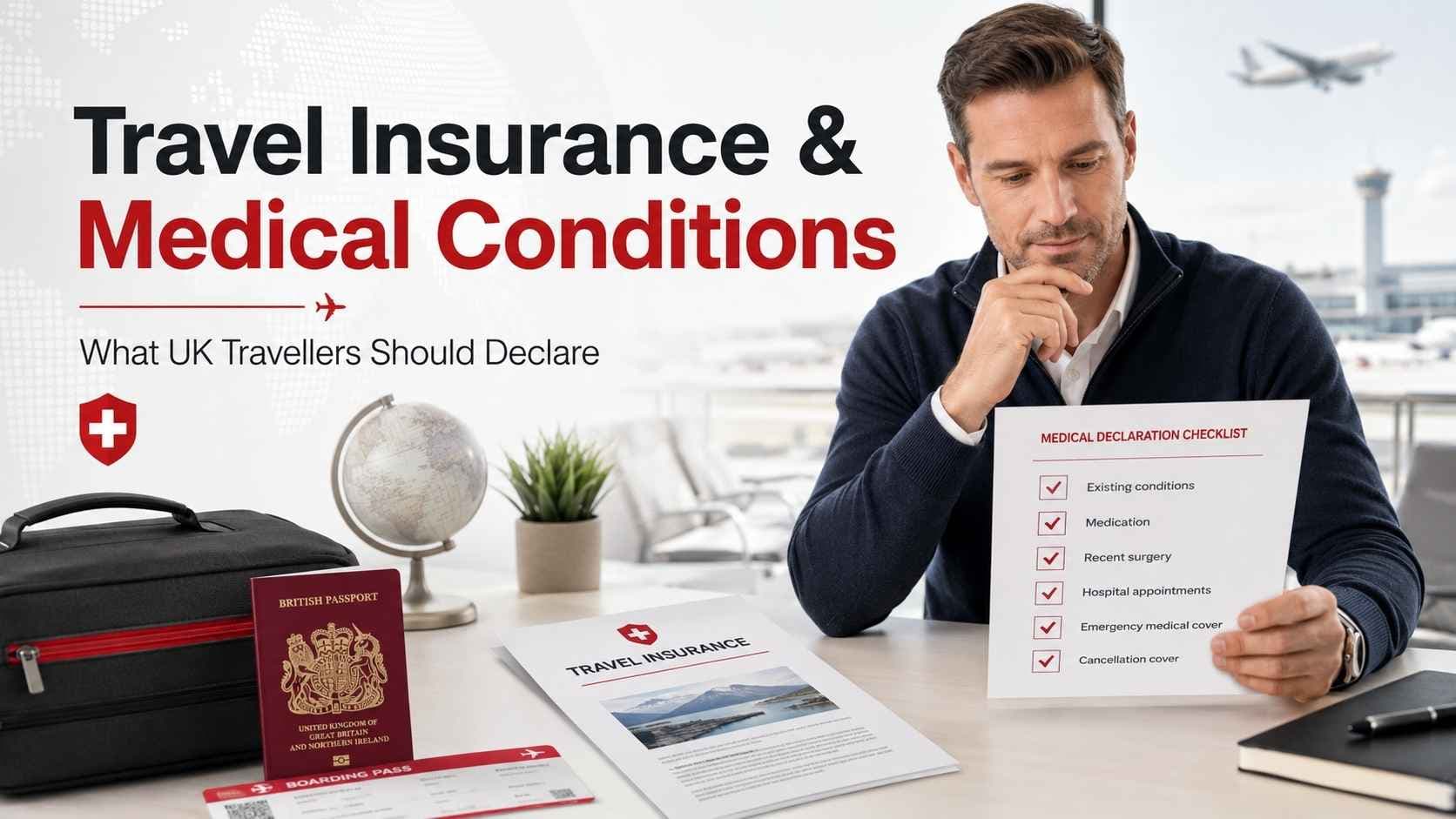
Travel Insurance and Medical Conditions: What UK Travellers Should Declare
Travel Insurance and Medical Conditions: What UK Travellers Should Declare
Travel insurance can help protect you if something goes wrong before or during your trip. It may cover areas such as emergency medical treatment, cancellation, lost luggage and travel disruption, depending on the policy.
However, if you have a medical condition, it is very important to declare it properly when buying travel insurance. MoneyHelper explains that travellers need to declare existing medical conditions and should not assume a condition is covered without checking with the insurance provider.
Why medical declarations matter
Insurance is based on accurate information. If you do not declare a medical condition when asked, your insurer may reject a claim connected to that condition.
This could leave you with expensive medical bills or cancellation costs.
1. Declare existing medical conditions
When applying for travel insurance, answer all medical questions honestly. You may need to declare:
- Ongoing health conditions
- Recent surgery
- Regular medication
- Hospital appointments
- Heart conditions
- Diabetes
- Asthma
- Cancer history
- Mental health conditions
- Previous serious illness
Different insurers ask questions in different ways, so read them carefully.
2. Do not assume minor conditions are irrelevant
Some travellers think a condition is too small to mention. However, if the insurer asks about it, you should declare it.
MoneyHelper advises customers not to assume a condition is covered and to ask the provider if unsure.
3. Check cancellation cover
Medical conditions can affect whether you need to cancel a trip. Check whether your policy covers cancellation linked to your condition.
Also check when the cover starts. Cancellation cover is usually most useful from the time you buy the policy, not just from the date you travel.
4. Check emergency medical treatment cover
Medical treatment abroad can be expensive. Review:
- Emergency medical cover limit
- Repatriation cover
- Hospital treatment rules
- Exclusions
- Emergency assistance contact details
Make sure the policy is suitable for your destination and health needs.
5. Consider specialist travel insurance
If you have a serious or complex medical condition, standard travel insurance may not be suitable. MoneyHelper provides a travel insurance directory to help people with medical conditions find specialist providers.
6. Check activities and destination rules
Medical conditions are not the only issue. You should also check whether the policy covers:
- Cruise holidays
- Winter sports
- Adventure activities
- Long trips
- Business travel
- Travel against official advice
- Multiple destinations
7. Keep documents with you
When travelling, keep access to:
- Policy documents
- Emergency helpline number
- Medical declaration confirmation
- Medication list
- EHIC/GHIC card if applicable
- Doctor’s letter if needed
This can make things easier in an emergency.
Final Tip
Declaring medical conditions may feel inconvenient, but it helps ensure your travel insurance is suitable. If you are unsure whether to declare something, ask the insurer before buying.
FAQ
Do I need to declare all medical conditions?
You should declare all conditions the insurer asks about. If unsure, ask before buying.
Can I still get travel insurance with a medical condition?
Often yes, but you may need specialist cover depending on the condition.
What happens if I do not declare a condition?
A related claim may be rejected, leaving you to pay the cost yourself.